
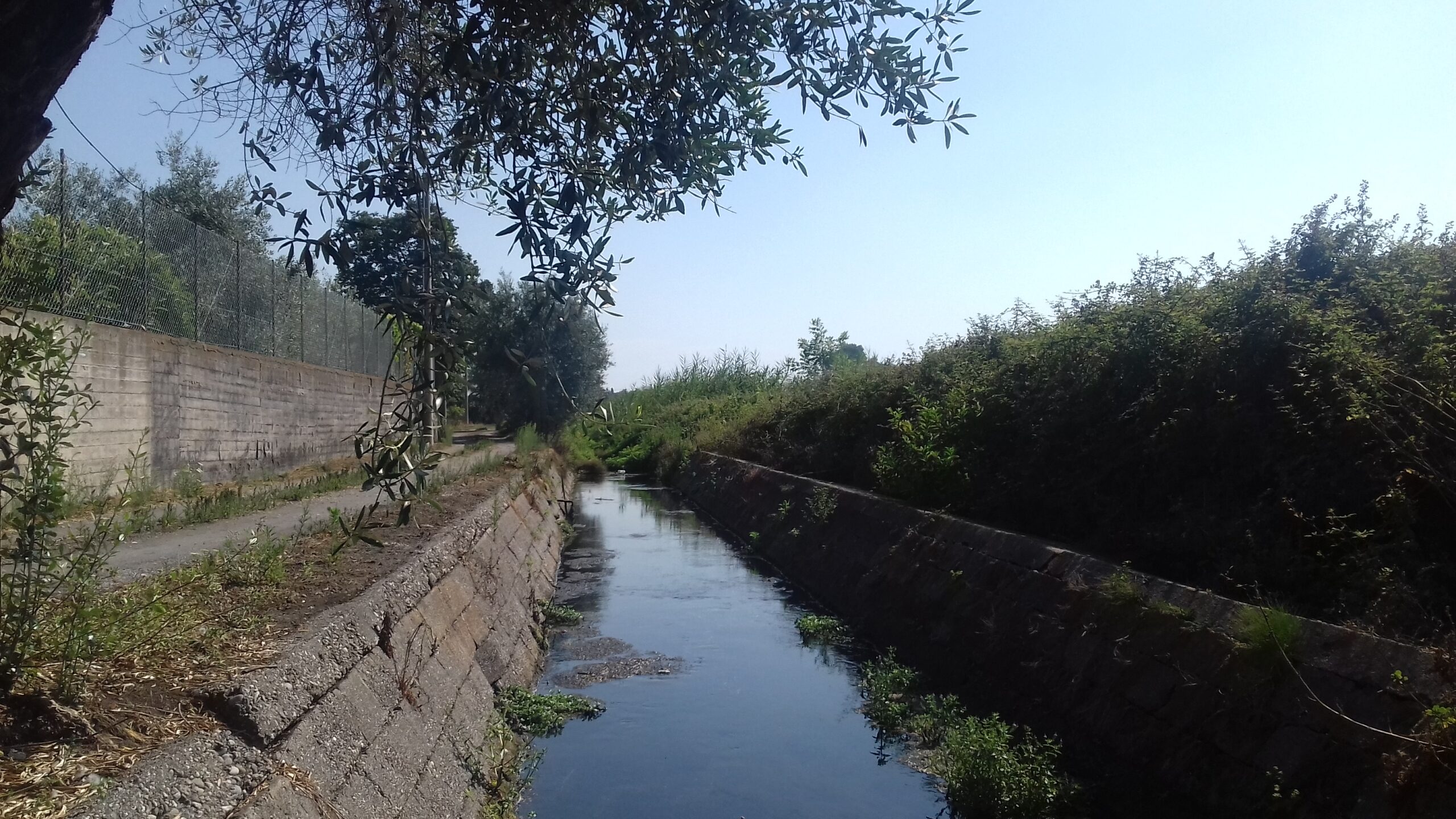
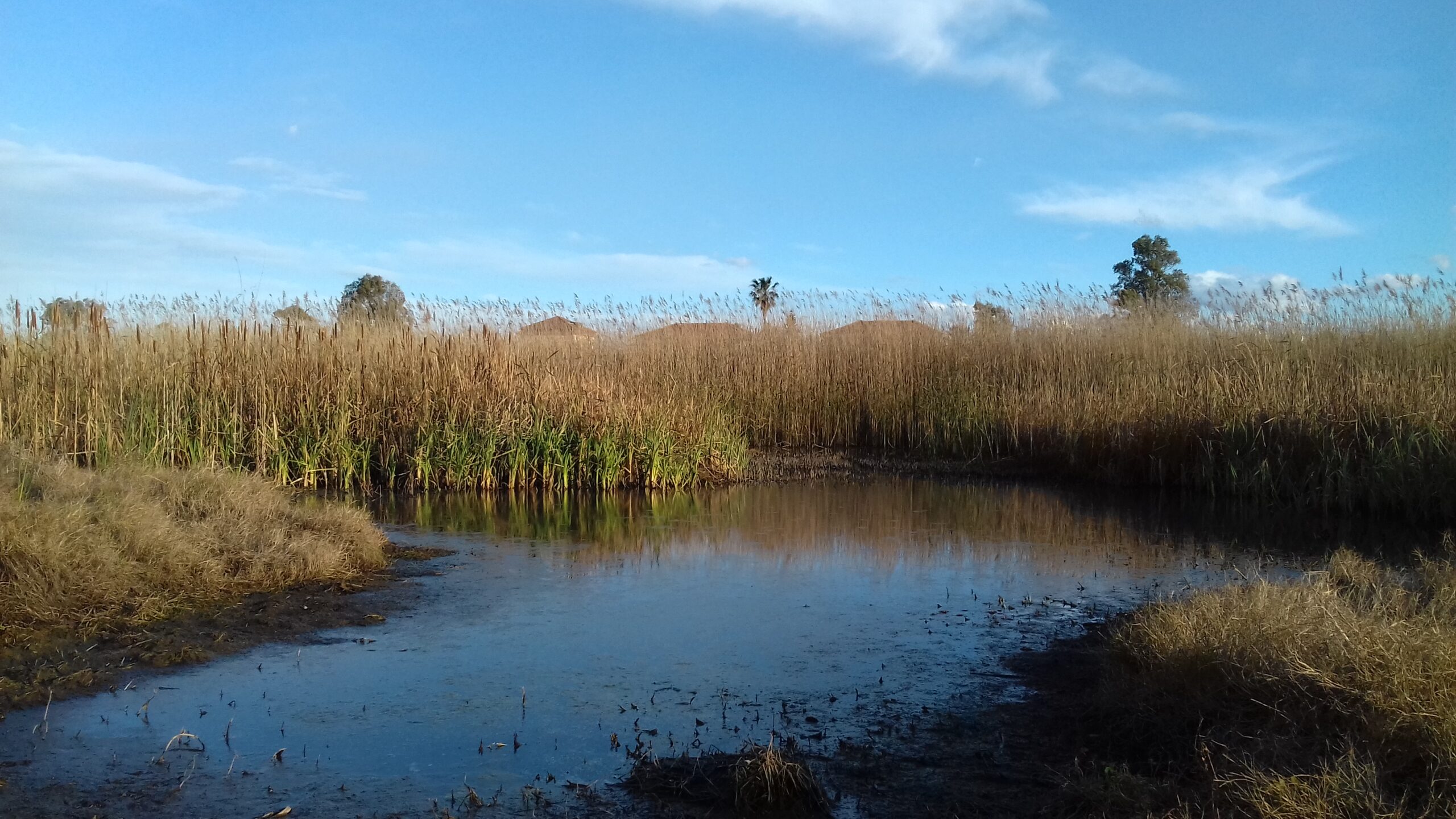
North of the settlement of Fondachello lies a small coastal pond, known in the past as “Gurna di Pane e Vino” and currently as “Gurna di Fondachello”. It was formerly fed by three springs—Gebbia, Fico, and Pane e Vino—whose waters, originating from the northeastern slopes of Mount Etna, were diverted toward the sea via drainage channels constructed in the second half of the 20th century.
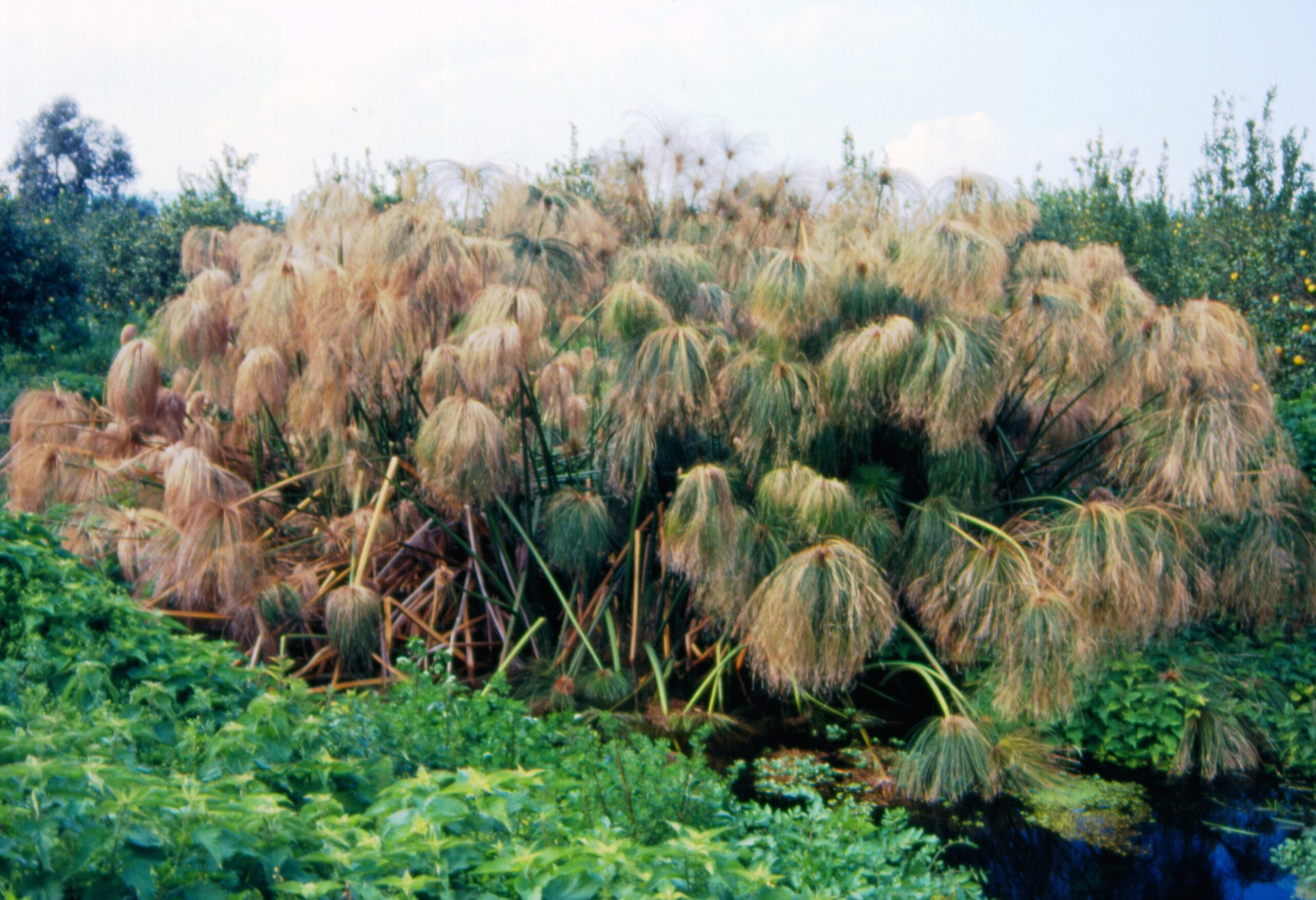
The “Gurna” area is of significant naturalistic importance due to the unique conditions created by the cold, slow-flowing waters of the channels. These waters support aquatic vegetation of rare beauty, featuring the coexistence of “Nordic” species—such as the stream water-crowfoot (“Ranunculus penicillatus”)—and “African” species, such as papyrus.
The lowest-lying part of the marsh, flooded only during certain times of the year, is covered by reed beds, while rush beds grow along the slightly higher margins.
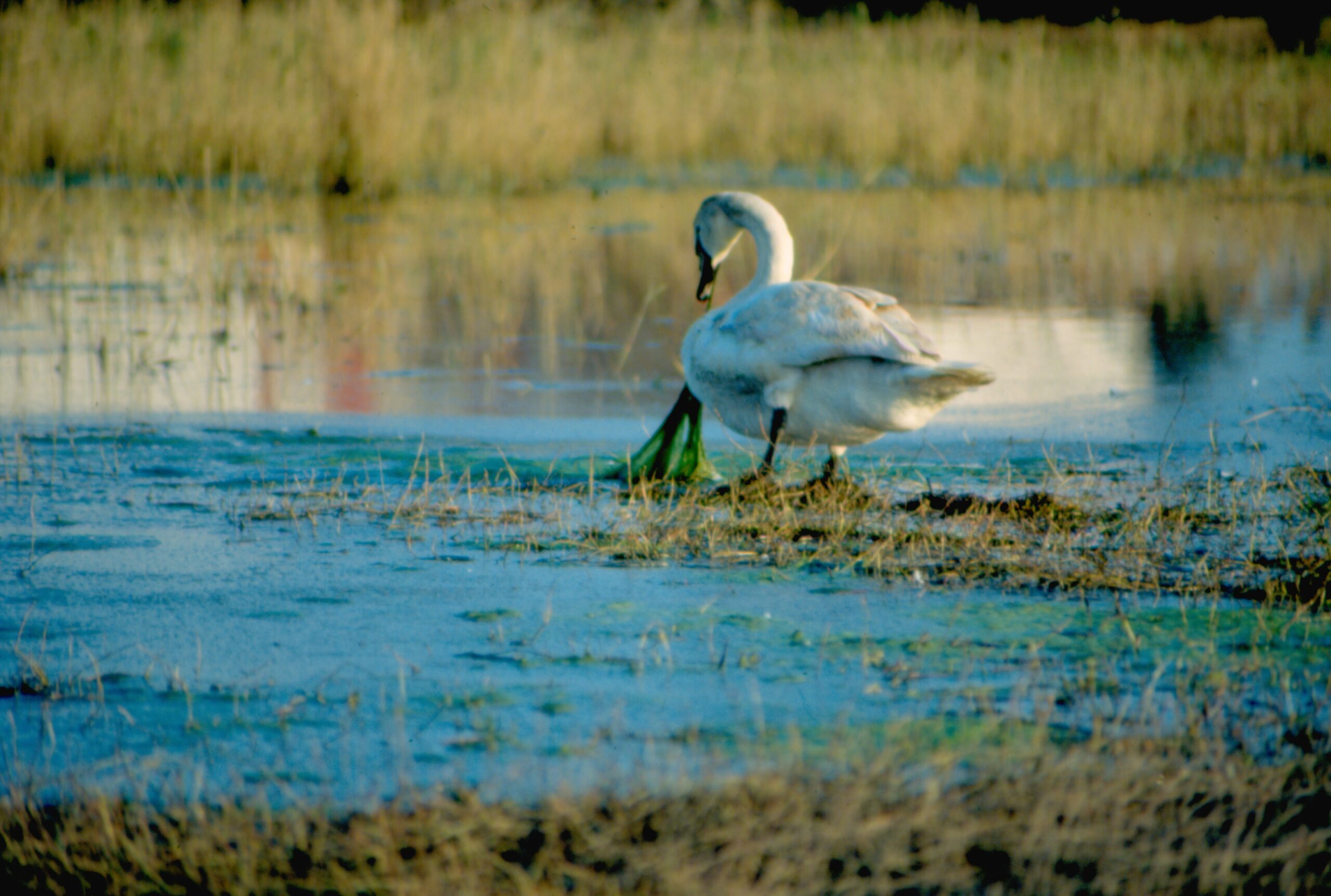
From a zoological perspective, the “Gurna” serves as a vital stopover, wintering, and nesting site for birds such as moorhens, coots, and black-winged stilts; it is the only remaining wetland along the Ionian coast between the mouth of the Simeto River and Messina.
From a geo-volcanological standpoint, the area experienced intense secondary volcanic activity until the last century, characterized by the intermittent formation of a
The earliest record dates back to 1693, when, following the earthquake of January 11, a fountain of muddy water was observed reaching a height of 32 meters. In subsequent years, the mud volcano disappeared and reappeared several times, finally collapsing for good in 1847. Currently, there is no trace of the mud volcano, and the only sign of activity is a methane emission along a drainage channel.
Come arrivare
